$4,200.00
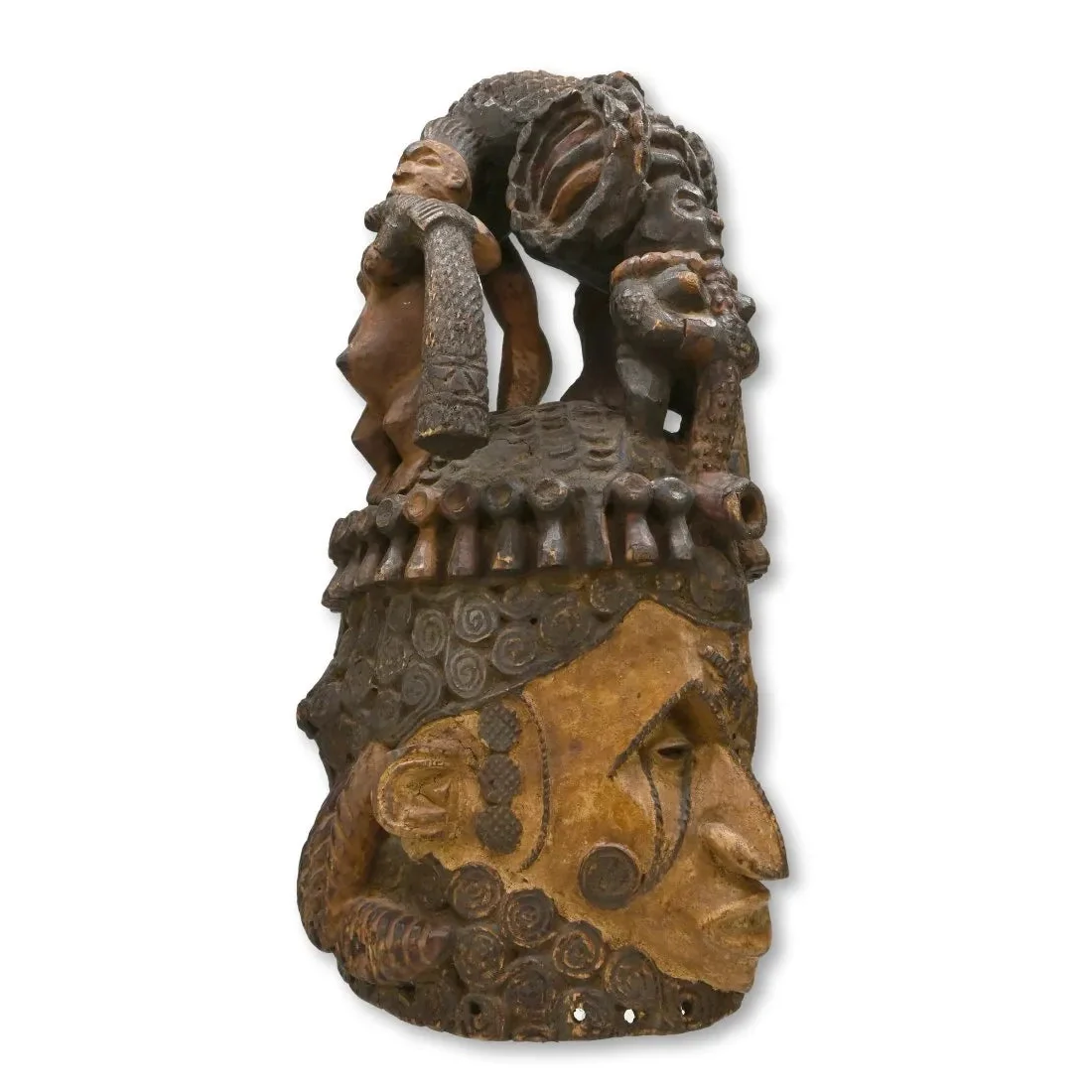
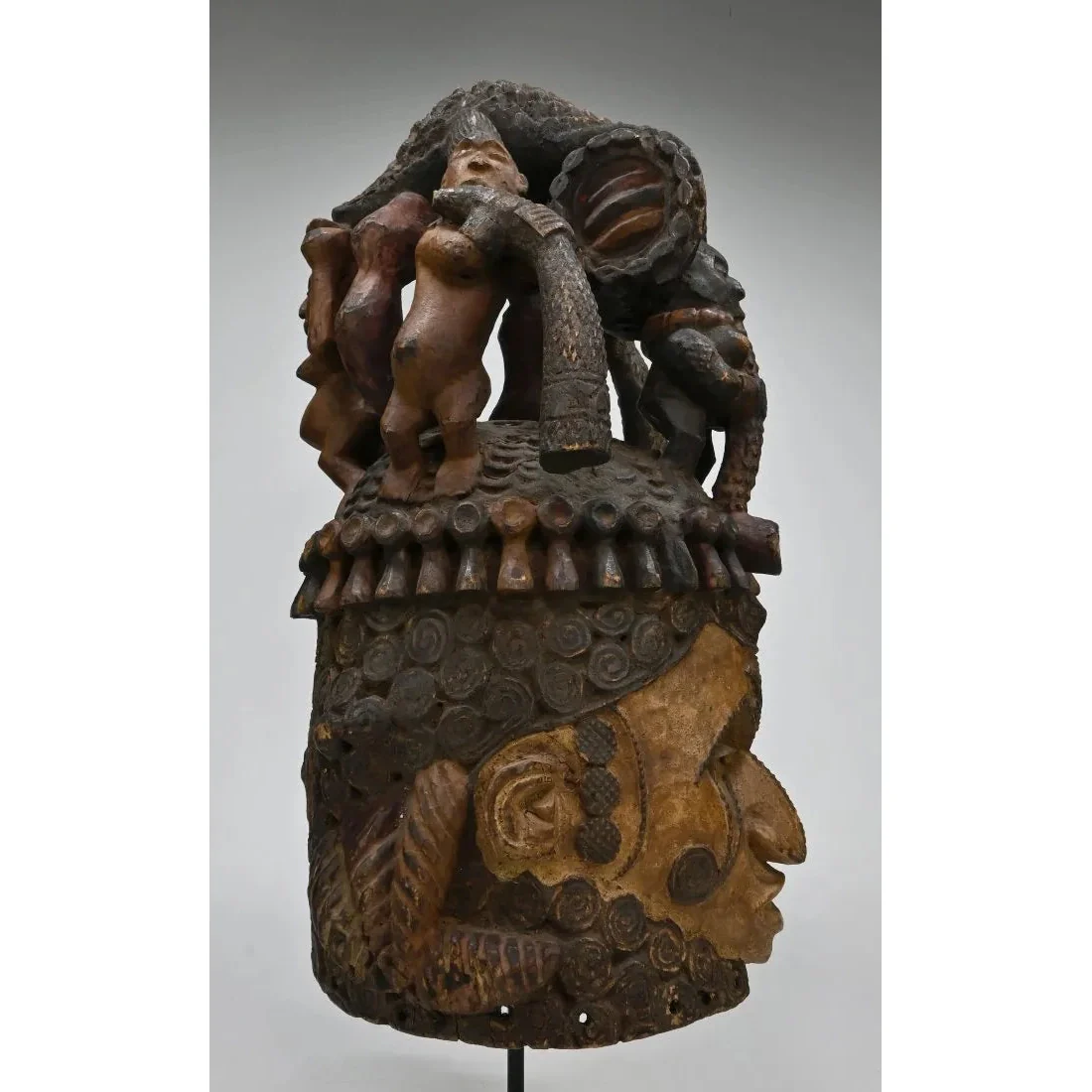
Igbo Helmet Maiden Mask, Nigeria PROVENANCE Ex: Birmingham Museum of Art, AL, USA—
$4,200.00
The Story
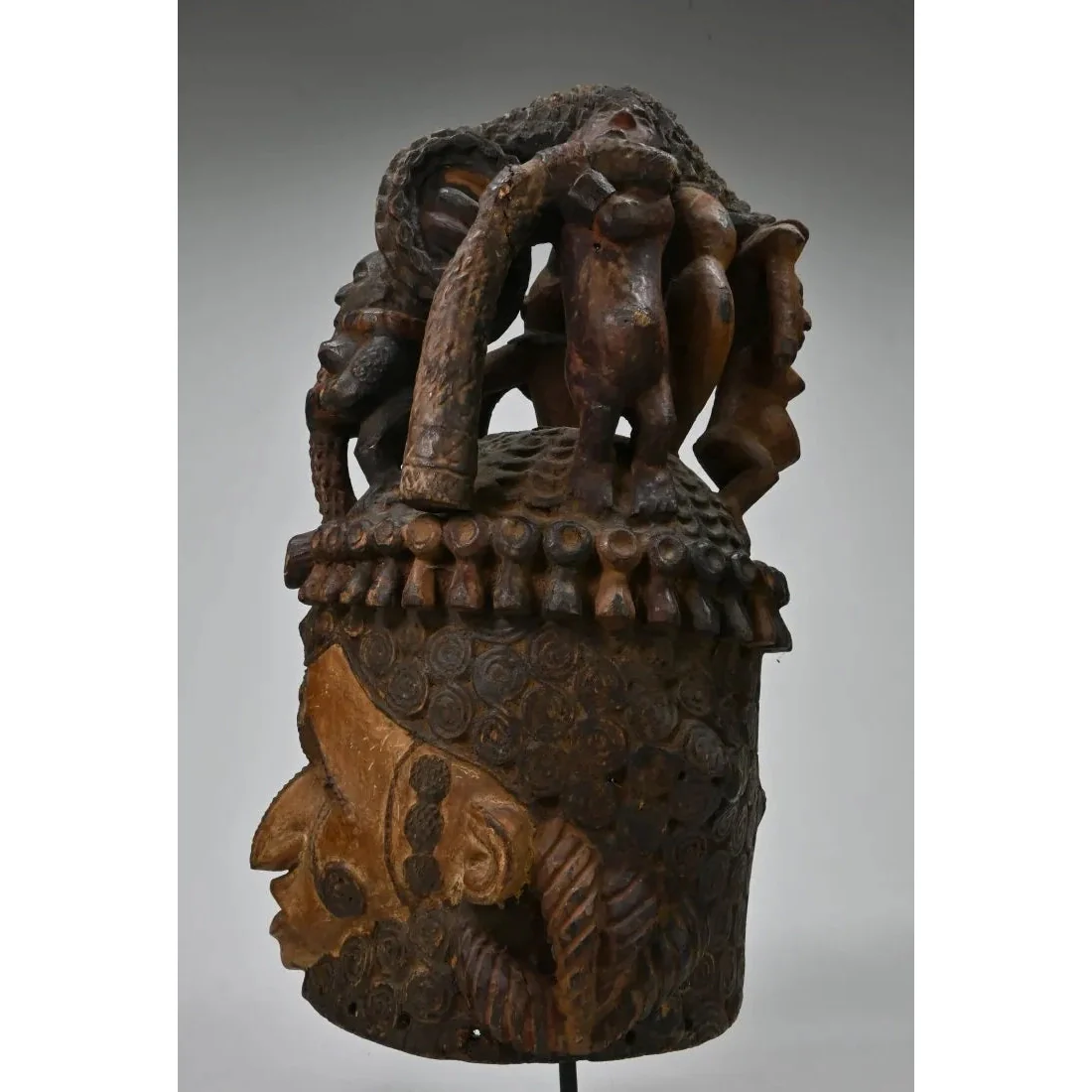
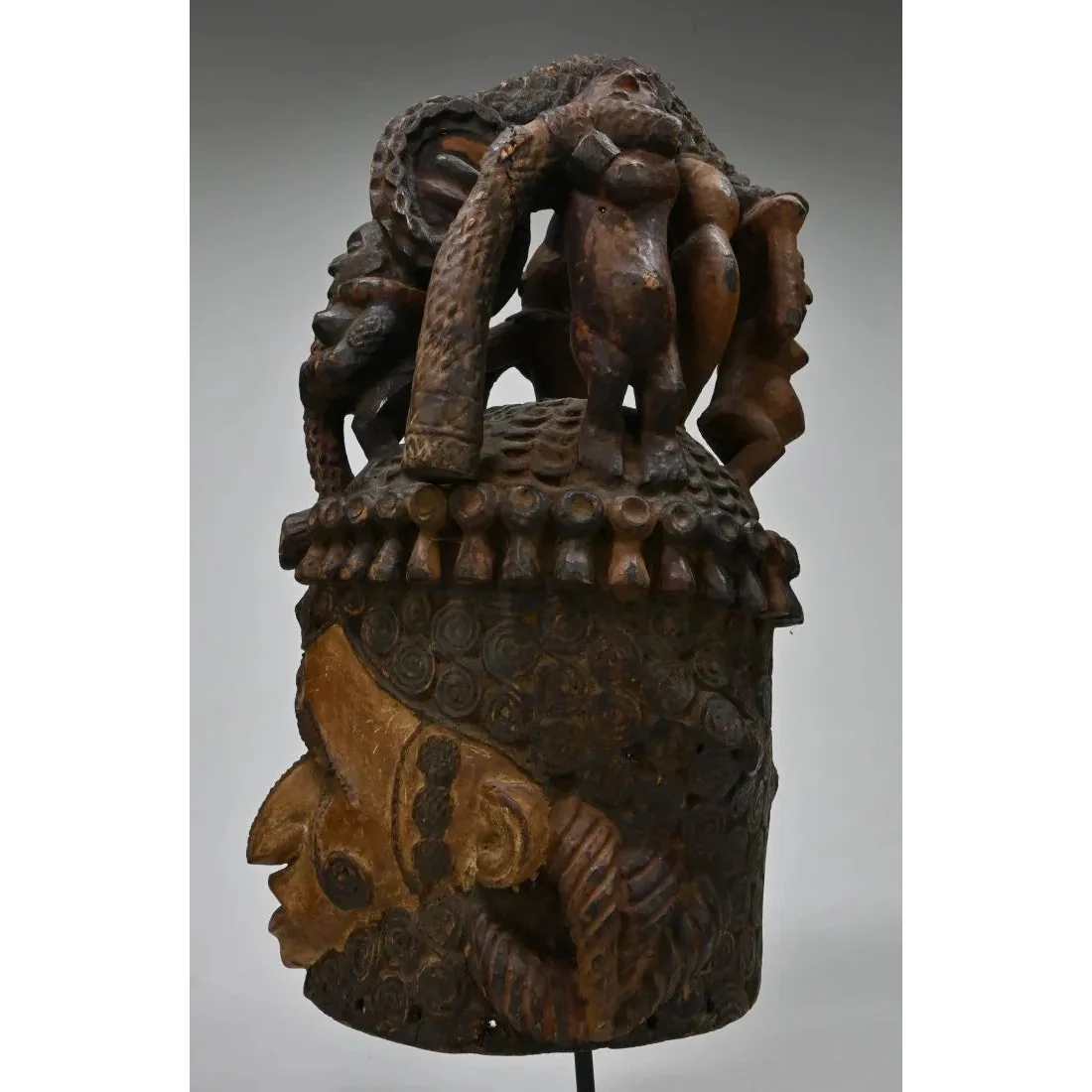
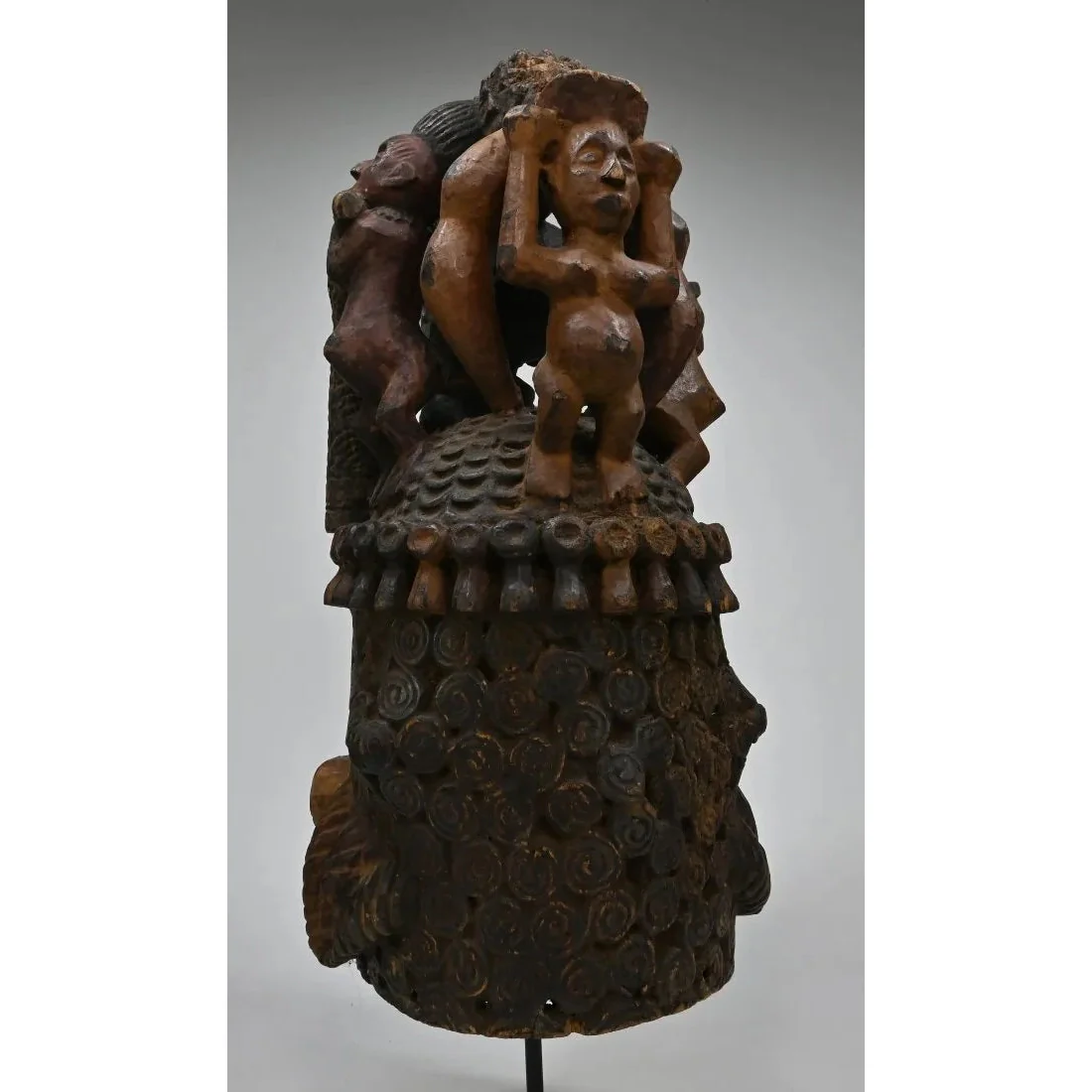
- Igbo Helmet Maiden Mask / Headdress, Nigeria
- Provenance: Ex: Birmingham Museum of Art, AL, USA. , Ex Dr Gilbert Jackson collection, MD, USA.
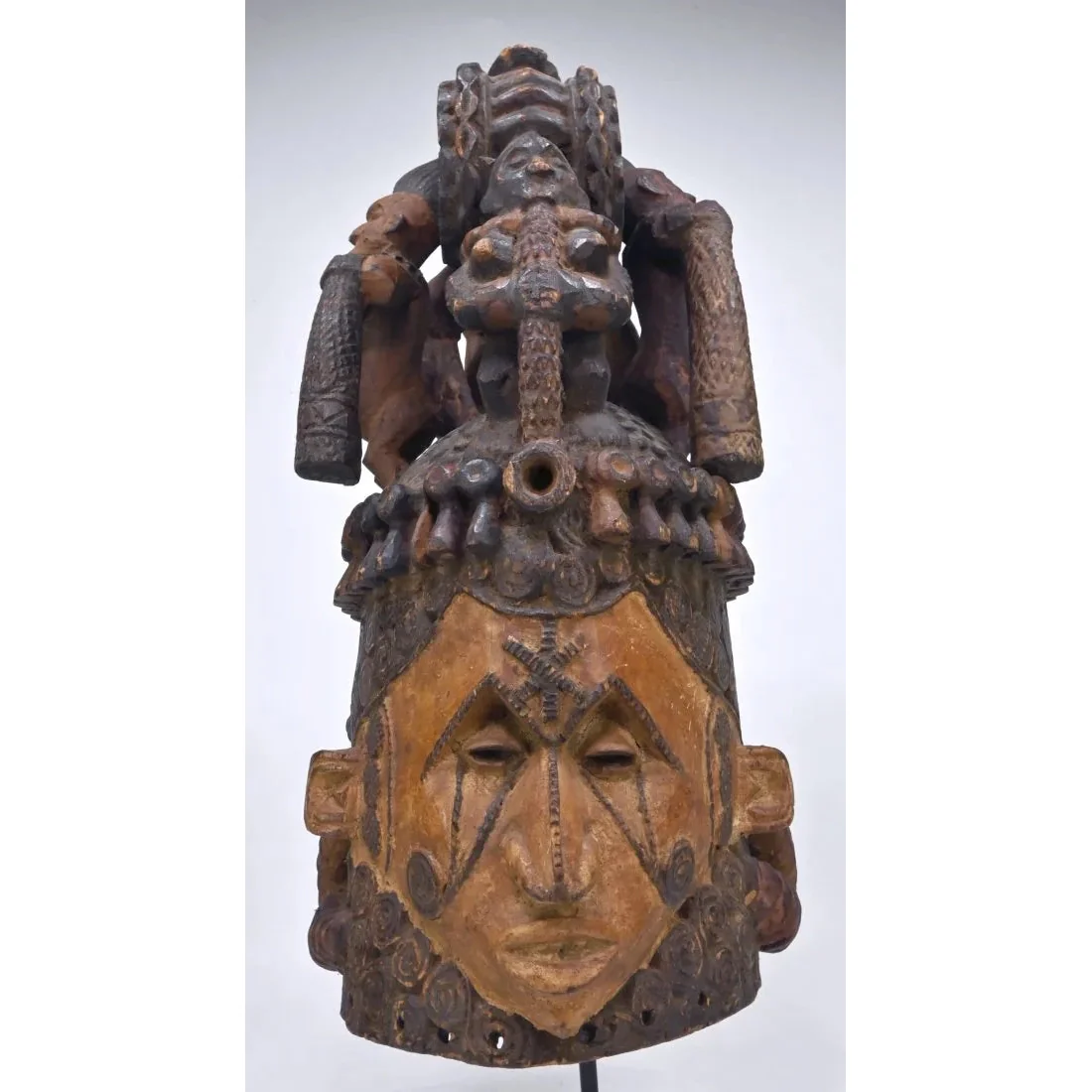
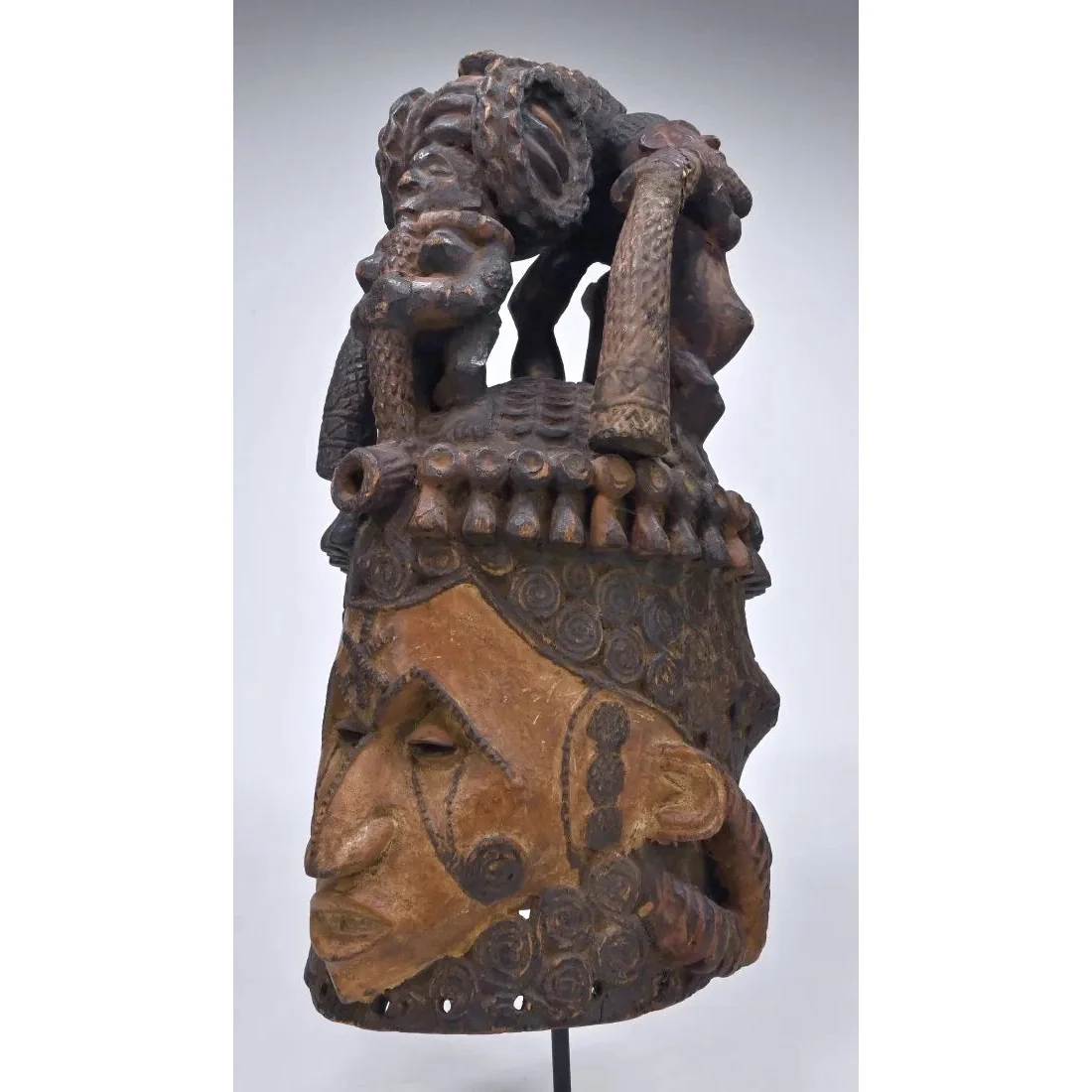
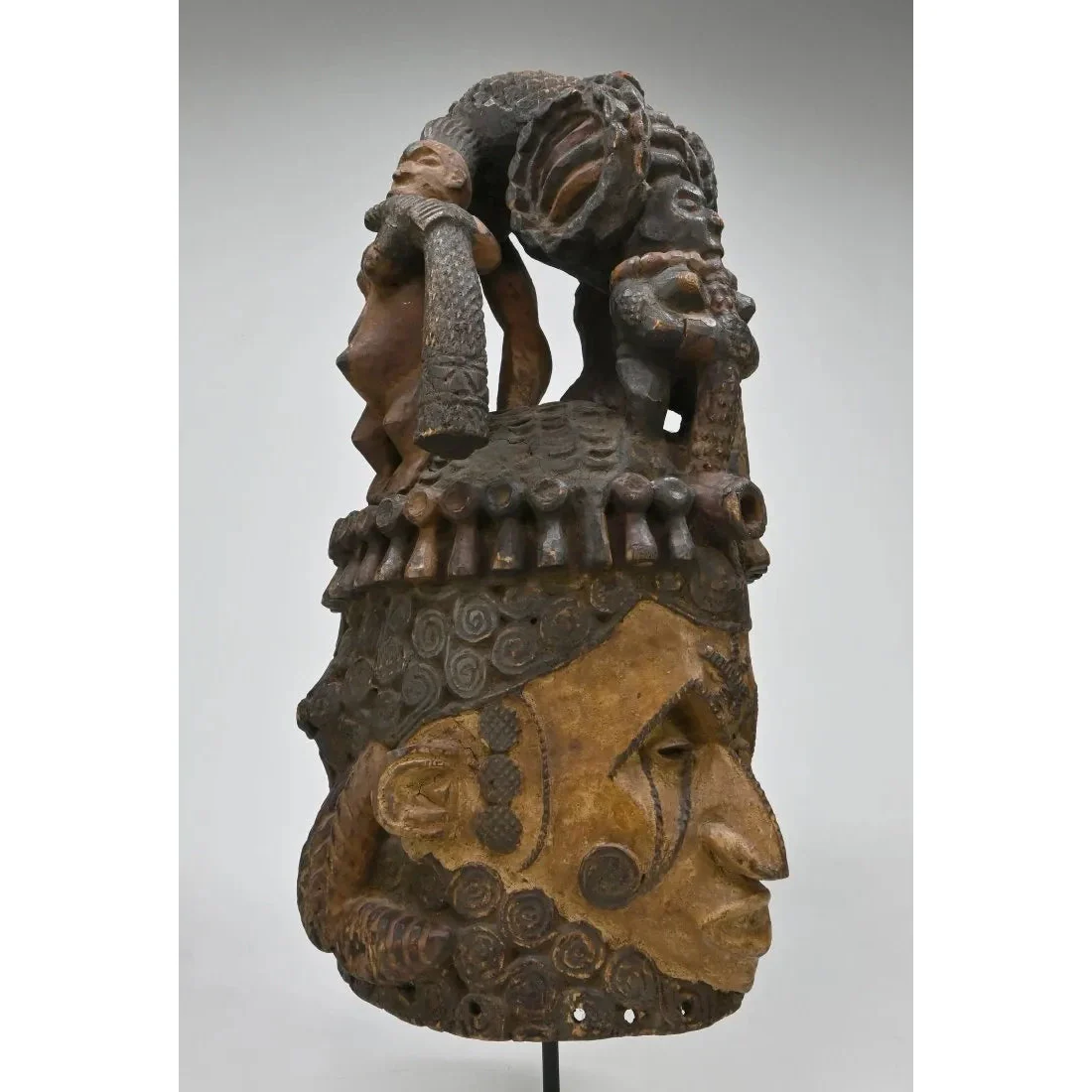
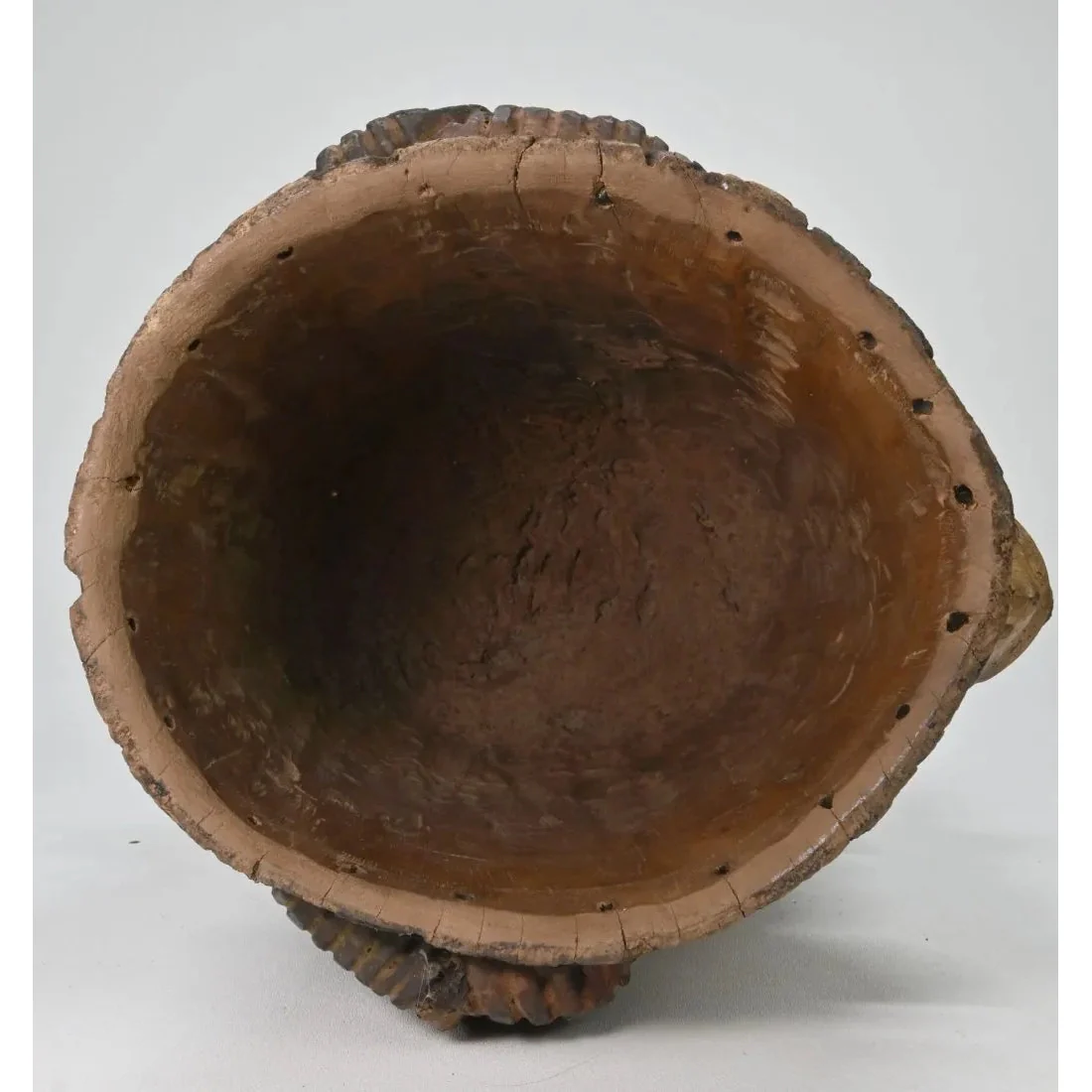
- Tall carved wooden helmet mask or headdress, with elaborate carved details and some openwork design featuring several anthropomorphic figures, kaolin clay pigments and raised carved motifs.
- Igbo People, Nigeria
- Measurements: 22.5 inches tall.
- Well handled and worn, good condition, amazing patina
- Display Stand included.
- Igbo Ideals of Beauty are based on both physical and moral dimensions. Traditional Igbo Society's Idealized Female Beauty dictates physically a girl should be tall and slender, with a long neck, full and pointed breasts, light complexion and small features, her hair elaborately dressed (preferably in the crested style) and her features brought out by facial tattoos.
- These observable qualities mirror the Spiritual Traits desired by Igbo males - Purity, as defined by the paleness of her complexion, grace in the form of
her facial features and the manner in which the spirit is danced, obedience, good character, and generosity. In addition, the crested hairstyle, which is
often considered a sign of wealth or royalty, is a symbol of the young Igbo maiden as the source of bride-wealth for her family upon her marriage. Such
physical and moral ideals are often not matched in reality, and are not necessarily meant to the maiden spirits are transcendent, a connection between
Igbo desires of beauty and the spiritual awesomeness of the incarnate dead.
Maiden mask artists favored red, orange, yellow, and black pigments to highlight their carvings, along with other colors, and these can be seen on the
entirety of the mask. As in a number of the more elaborate masks, which can have anywhere from one to three hair crests, this maiden has three crests
dramatically pairing positive and negative space.
Maiden masks are used mostly during agricultural festivals (usually the dry season) and the second funerals of prominent society members. On latter
occasions maiden spirits are invoked alongside other spirits as appropriate escorts of the highly respected dead into the spirit world. During agricultural
or other ceremonies, however, maiden spirits appear to aid in watching over the living and to promote abundant harvests, fertility, and general
prosperity. Maiden spirits are light-hearted in contrast to more menacing spirits of the Igbo world, which often generate a more serious atmosphere.
Maiden maskers perform almost theatrically, as if in a play, their purpose to entertain both human and spirit audiences.
SOURCE:
Aniakor, Chike C. and Herbert M. Cole. Igbo Arts: Community and Cosmos. Museum of Cultural History, University of California: Los Angeles, 1984.
"The white maiden masks, all danced by men, have super structures of several
types, indicating spirit characters of different ages. The eldest daughter, called
Headload because of her mask's large figured superstructure, leads the others. Her
younger sisters, following, have elaborate crested hairstyles and small pointed
breasts. All wear bright polychrome appliqué cloth "body suits" whose patterning
loosely resemble monochromatic designs painted on youthful females in the area.
Other characters in the drama are a mother, a father, sometimes an irresponsible
son, and a suitor costumed as a titled elder, whose amorous, often bawdy advances
to one or more "girls" are invariably rebuffed. The play unfolds predictably, with the
maidens' dances becoming ever faster and more virtuosic as the maskers compete
with one another for audience approval and even financial reward."
Source: A History of Art in Africa
Details & Craftsmanship
Every detail has been carefully considered to bring you the perfect product.
Details & Craftsmanship
Every detail has been carefully considered to bring you the perfect product.
Details & Craftsmanship
Every detail has been carefully considered to bring you the perfect product.
Details & Craftsmanship
Every detail has been carefully considered to bring you the perfect product.
Details & Craftsmanship
Every detail has been carefully considered to bring you the perfect product.
Details & Craftsmanship
Every detail has been carefully considered to bring you the perfect product.
Details & Craftsmanship
Every detail has been carefully considered to bring you the perfect product.
Details & Craftsmanship
Every detail has been carefully considered to bring you the perfect product.
Description
- Igbo Helmet Maiden Mask / Headdress, Nigeria
- Provenance: Ex: Birmingham Museum of Art, AL, USA. , Ex Dr Gilbert Jackson collection, MD, USA.
- Tall carved wooden helmet mask or headdress, with elaborate carved details and some openwork design featuring several anthropomorphic figures, kaolin clay pigments and raised carved motifs.
- Igbo People, Nigeria
- Measurements: 22.5 inches tall.
- Well handled and worn, good condition, amazing patina
- Display Stand included.
- Igbo Ideals of Beauty are based on both physical and moral dimensions. Traditional Igbo Society's Idealized Female Beauty dictates physically a girl should be tall and slender, with a long neck, full and pointed breasts, light complexion and small features, her hair elaborately dressed (preferably in the crested style) and her features brought out by facial tattoos.
- These observable qualities mirror the Spiritual Traits desired by Igbo males - Purity, as defined by the paleness of her complexion, grace in the form of
her facial features and the manner in which the spirit is danced, obedience, good character, and generosity. In addition, the crested hairstyle, which is
often considered a sign of wealth or royalty, is a symbol of the young Igbo maiden as the source of bride-wealth for her family upon her marriage. Such
physical and moral ideals are often not matched in reality, and are not necessarily meant to the maiden spirits are transcendent, a connection between
Igbo desires of beauty and the spiritual awesomeness of the incarnate dead.
Maiden mask artists favored red, orange, yellow, and black pigments to highlight their carvings, along with other colors, and these can be seen on the
entirety of the mask. As in a number of the more elaborate masks, which can have anywhere from one to three hair crests, this maiden has three crests
dramatically pairing positive and negative space.
Maiden masks are used mostly during agricultural festivals (usually the dry season) and the second funerals of prominent society members. On latter
occasions maiden spirits are invoked alongside other spirits as appropriate escorts of the highly respected dead into the spirit world. During agricultural
or other ceremonies, however, maiden spirits appear to aid in watching over the living and to promote abundant harvests, fertility, and general
prosperity. Maiden spirits are light-hearted in contrast to more menacing spirits of the Igbo world, which often generate a more serious atmosphere.
Maiden maskers perform almost theatrically, as if in a play, their purpose to entertain both human and spirit audiences.
SOURCE:
Aniakor, Chike C. and Herbert M. Cole. Igbo Arts: Community and Cosmos. Museum of Cultural History, University of California: Los Angeles, 1984.
"The white maiden masks, all danced by men, have super structures of several
types, indicating spirit characters of different ages. The eldest daughter, called
Headload because of her mask's large figured superstructure, leads the others. Her
younger sisters, following, have elaborate crested hairstyles and small pointed
breasts. All wear bright polychrome appliqué cloth "body suits" whose patterning
loosely resemble monochromatic designs painted on youthful females in the area.
Other characters in the drama are a mother, a father, sometimes an irresponsible
son, and a suitor costumed as a titled elder, whose amorous, often bawdy advances
to one or more "girls" are invariably rebuffed. The play unfolds predictably, with the
maidens' dances becoming ever faster and more virtuosic as the maskers compete
with one another for audience approval and even financial reward."
Source: A History of Art in Africa